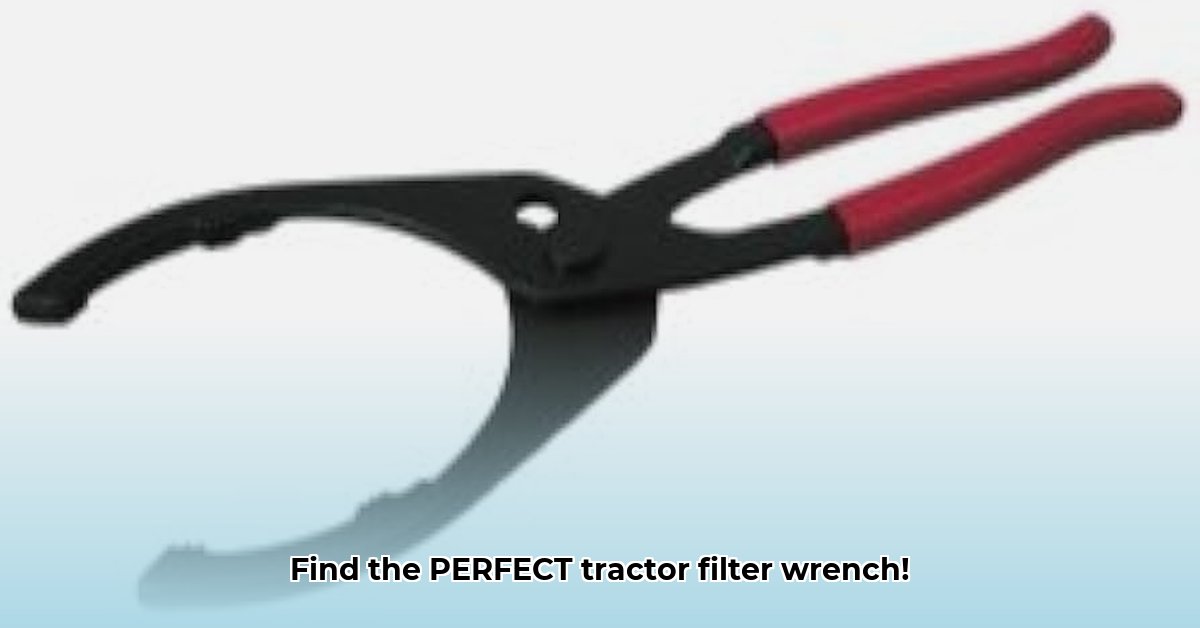
Maintaining your tractor efficiently is crucial for sustainable agriculture. A seemingly small detail, like choosing the right oil filter wrench, can significantly impact your maintenance routine. This guide provides a structured approach to selecting and using the ideal wrench for your needs, saving you time and preventing costly mistakes. For cross-referencing tractor oil filter types, check out this helpful resource: oil filter cross-reference.
Understanding Tractor Oil Filters
Before selecting a wrench, you need to understand your tractor's oil filter. Tractor filters vary considerably in size, shape, and type. The most common type is the spin-on filter, but some tractors use cartridge filters, requiring different removal techniques. Always consult your tractor's owner's manual to identify your filter's exact specifications – this is crucial for wrench compatibility. Neglecting this step can result in purchasing an incompatible wrench.
Types of Oil Filter Wrenches
Several types of wrenches are available for removing tractor oil filters, each with unique advantages and disadvantages. Choosing correctly ensures a smooth and efficient oil change.
Strap Wrenches
These adjustable wrenches accommodate various filter sizes. Their flexible straps provide a secure grip without damaging the filter.
- Pros: Versatile, adaptable to different sizes, relatively inexpensive.
- Cons: Can slip on very oily or damaged filters; may not provide the strongest grip on extremely stubborn filters.
Cap Wrenches
Designed to fit specific filter cap sizes, these wrenches provide a precise and secure fit for efficient removal.
- Pros: Strong grip, prevents slippage.
- Cons: Only compatible with specific filters; multiple wrenches are necessary for different filter sizes.
Cup Wrenches
These wrenches encircle the entire filter, offering maximum contact and grip, even on extremely tight filters.
- Pros: Excellent grip, ideal for stubborn filters.
- Cons: Requires multiple wrenches for different filter sizes, reducing versatility. Note that some cup wrenches are specifically designed for a single filter size, negating this "con" to some extent.
Choosing the Right Wrench: A Decision-Making Framework
Selecting the appropriate wrench involves considering several key factors:
Tractor Model and Oil Filter Size: This is paramount. Consult your owner's manual for the specific dimensions of your oil filter.
Material and Durability: Steel and various alloys are commonly used. Higher-quality materials offer superior strength, corrosion resistance, and longevity, leading to long-term cost savings. A higher-quality wrench will pay for itself over time given its longevity.
Ease of Use and Grip: A comfortable and secure grip prevents slips and reduces effort. Look for ergonomic designs. A comfortable grip is key to efficiency and injury prevention. Don't underestimate the value of a comfortable grip for long oil changes!
Sustainability Considerations: While durability is key for longevity, consider the wrench's recyclability at the end of its lifespan. Choose from durable materials that minimize waste.
How to Use a Tractor Oil Filter Wrench: A Step-by-Step Guide
Changing your oil filter is straightforward with the right wrench, but safety precautions are essential.
Preparation: Ensure the engine is cool. Gather necessary tools: new oil filter, fresh oil, drain pan, and rags. Always wear safety glasses.
Loosen the Old Filter: Securely position the wrench. Turn counterclockwise to loosen. If stuck, gently tap the wrench with a hammer.
Remove the Old Filter: Once loose, carefully unscrew it by hand. Have your drain pan ready to collect spilled oil.
Prepare the New Filter: Lightly lubricate the new filter's rubber gasket with fresh oil to ensure a good seal and prevent leaks.
Install the New Filter: Screw the new filter on by hand until snug.
Final Tightening: Use the wrench to tighten according to manufacturer instructions (typically ¾ to 1 full turn after the gasket contacts the housing). Avoid overtightening.
Disposal: Dispose of the old filter properly according to local regulations.
Oil Level Check: Add the correct amount of new oil and verify the oil level.
Maintenance and Care
Clean your wrench after each use to remove oil and debris. Store it in a dry place to prevent corrosion. Regular inspection will extend its lifespan.
Recommended Wrenches: A Concise Review
This table summarizes several well-regarded wrench types. Specific brand recommendations depend on market availability and your individual needs.
| Wrench Type | Material | Key Features | Advantages | Disadvantages |
|---|---|---|---|---|
| Strap Wrench | High-carbon steel | Adjustable, durable | Versatile, affordable, adaptable | Can slip on very oily filters; may not offer optimal grip |
| Cap Wrench | Chrome vanadium | Precise fit for specific filter caps | Secure grip, prevents slippage | Limited to one filter size; multiple wrenches required |
| Cup Wrench | Steel or Alloy | Full filter engagement for maximum grip | Excellent grip on stubborn filters | Usually requires multiple wrenches for versatility |
Conclusion
Selecting the right tractor oil filter wrench is vital for efficient and sustainable tractor maintenance. By understanding filter types, wrench options, and proper usage, you can significantly improve your maintenance routine. Remember, the right tool makes all the difference!